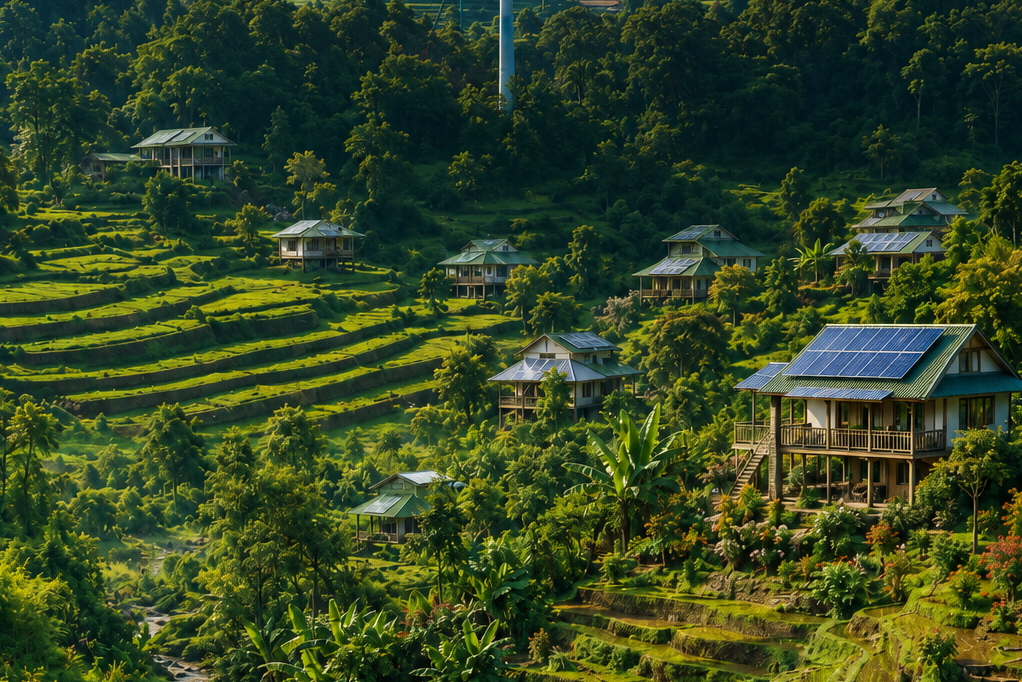
Let’s think about translating the book into action. What it might take is what I call “Living the Book,” a year-long program, where we go through a chapter or two each month and decide what action we can take on it, if it implies an action (so maybe we have to re-examine the book and pull out 12 key themes that we could cover, design a coherent program around that (e.g., have a speaker on water issues, kind of like an ERA town hall, only with specific actions each of us can do), bearing in mind that having an audacious goal (e.g., Building a Better Future Today) is more inspiring than individual tasks or projects. Maybe we could have different members of the group report on the various themes and keep track of key events, e.g., have a Google alert set up that reflects that theme), and we can coordinate via a Google Group that members can join easily to participate in the program. Please lay out a program in detailed but summary form, so it does not sound overwhelming but sounds inviting and inspiring. It does not have to follow the book’s format. but could be arranged around cross-cutting themes such as children’s education, the health of the bioregion, transforming the landscape, etc. Be creative, using everything that is currently being done in the field of global transformation and human survival.
This can become much more than a book club. The crucial design choice is to make Living the Book a year-long action-learning community: the book supplies the worldview, invited practitioners bring current experience, and participants gradually improve the places where they live.
Living the Book: Building a Better Future Today
A year of learning, belonging, and regenerative action inspired by Possible Planet
The audacious goal
Every place represented in the program should become more habitable because we came together.
By the end of the year, participants will have:
- Created or strengthened locally rooted regenerative projects.
- Built relationships across communities and fields of practice.
- Influenced at least some institutional decisions—not merely changed personal habits.
- Documented what worked so others can adapt it.
- Formed an ongoing network that connects local intelligence into planetary intelligence.
This is ambitious without requiring everyone to do everything. Each person or local circle chooses one “Living Project”—a school, stream, neighborhood, landscape, organization, business, policy campaign, food initiative, or community network—and develops it throughout the year.
The underlying structure
The program moves through four arcs:
- Seeing and belonging: Understand the predicament, imagine the future, and rediscover place.
- Restoring living systems: Work with water, soil, food, climate, and biodiversity.
- Redesigning human systems: Transform economy, technology, infrastructure, and livelihoods.
- Building collective capacity: Deepen justice, resilience, democracy, culture, and planetary intelligence.
Three questions run through every month:
- What does this mean for children and future generations?
- What does it mean in this particular bioregion?
- What can individuals, communities, and institutions do differently?
This reflects where the larger field is moving. UNESCO now emphasizes whole-community, intergenerational climate learning; the UN restoration movement calls for everyone to participate in reversing ecosystem degradation; and IPBES treats transformation as change across individual and collective levels, from local to global. UNESCO Greening Communities, UN Decade on Ecosystem Restoration, IPBES Transformative Change Assessment.
The twelve-month journey
| Month | Theme and book connections | Speaker and action |
|---|---|---|
| 1. Choosing a Possible Planet | Chapters 1–3 and selections from 7–8. Face overshoot, collapse, and regeneration without becoming trapped in despair. | Speaker: Earth-systems thinker or regenerative movement storyteller. Action: Create a “postcard from a habitable future,” identify the place each participant cares about, and choose a Living Project. |
| 2. Learning to Inhabit a Place | Chapters 9 and 15. Move from living at an address to belonging within a watershed, foodshed, culture, and community of life. | Speaker: Joe Brewer, Penny Heiple, a bioregional practitioner, or someone from Barichara Regenerativa. Action: Make a simple bioregional portrait showing water, land, food, people, Indigenous history, institutions, assets, and threats. |
| 3. Children and the Future | Selections from Chapters 6, 18–20. Ask what education would look like if its purpose were to prepare children to inherit and regenerate the Earth. | Speaker: Youth leader, teacher, nature educator, or intergenerational-learning practitioner. Action: Hold a youth listening circle or partner with a school, library, garden, or after-school program on one locally meaningful learning experience. UNESCO’s current guidance explicitly links schools, learners, and real community resilience projects. UNESCO Green School Standard. |
| 4. Water Organizes Life | Selections from Chapters 4, 11, 14, and 15. Treat the watershed—not property lines—as a primary unit of understanding. | Speaker: Watershed steward, local riverkeeper, farmer, or Water Stories practitioner. Action: Conduct a water walk or neighborhood water audit; then undertake one appropriate intervention—stream monitoring, rain capture, infiltration, wetland protection, or watershed advocacy. Water Stories offers a useful learning-action model. |
| 5. Transforming the Landscape | Chapters 11 and 14. Bring together ecorestoration, regenerative agriculture, biodiversity, soil, and food. | Speaker: Jon Schull, an ERA practitioner, land trust, regenerative farmer, or restoration ecologist. Action: Adopt a small site or join an existing project; record a baseline and improve habitat, soil, native vegetation, pollinator support, or food production. ERA’s town-hall and network model is a natural partner. EcoRestoration Alliance. |
| 6. Climate: Emergency Action and Long Repair | Chapters 4–6. Combine rapid emissions reduction with restoration of forests, soils, wetlands, water cycles, and other living systems. | Speaker: Climate-solutions researcher, restoration scientist, or regenerative-finance practitioner. Action: Use the Drawdown Explorer to select one locally relevant, high-leverage intervention and pair it with an institutional or policy request. The current Explorer includes role-specific guidance rather than treating climate action as a list of household sacrifices. Drawdown Explorer. |
| 7. An Economy in Service to Life | Chapters 5 and 10. Explore regenerative finance, community wealth, circularity, reciprocity, and alternatives to GDP. | Speaker: Doughnut Economics practitioner, community lender, cooperative developer, or regenerative entrepreneur. Action: Map where local money leaves the community and identify one spending, procurement, ownership, or investment stream that could be redirected. Doughnut Economics offers open tools for linking social needs to ecological limits. DEAL tools. |
| 8. Designing as Nature Designs | Chapters 12 and 15. Bring biomimicry, permaculture, circular design, and living-systems thinking together. | Speaker: Biomimicry educator, designer, architect, engineer, or youth design team. Action: Hold a small design charrette around a real local problem—heat, stormwater, waste, mobility, school grounds, or habitat—and prototype a nature-inspired response. The Biomimicry Institute’s youth challenges show how local problems can become creative design invitations. Biomimicry Youth Design Challenge. |
| 9. Homes, Energy, Work, and Local Self-Reliance | Chapter 16, Chapter 21, and selections from Part II. Connect right livelihood with buildings, clean energy, repair, local production, and resilience. | Speaker: Community-energy organizer, green builder, repair cooperative, C-PACE practitioner, or regenerative business owner. Action: Advance one shared initiative: a home-energy workshop, repair café, community-solar effort, resilient building, skills exchange, or regenerative livelihood network. |
| 10. Indigenous Stewardship, Justice, and the Commons | Chapters 13 and 19. Examine relationship, sovereignty, stewardship, equity, and who participates in decisions. | Speaker: A compensated Indigenous leader or practitioner with a genuine relationship to the participating place. Action: Move beyond a ceremonial land acknowledgment: learn whose homelands participants inhabit, establish a relationship, and support an Indigenous-led priority. The global biodiversity framework now gives explicit importance to Indigenous participation, knowledge, and rights. Convention on Biological Diversity, Target 22. |
| 11. Resilient Communities and Living Democracy | Chapters 2, 7–8, and 19. Prepare for disruption while strengthening trust, mutual aid, and collective decision-making. | Speaker: Transition practitioner, mutual-aid organizer, public-health leader, emergency planner, or citizens’ assembly facilitator. Action: Create a neighborhood resilience map and conduct a small public deliberation on a real issue facing the Living Project. OECD research supports deliberative processes in which ordinary people learn together and work through complexity. OECD citizen participation guidelines. |
| 12. Planetary Intelligence and the Great Turning | Chapters 18–21, the Postscript, and the Earth-and-AI declaration. Integrate ecological, cultural, spiritual, technological, and civic intelligence. | Speaker: The participants themselves, joined by Possible Planet Lab or Institute contributors. Action: Hold a public “Possible Planet Assembly,” present the Living Projects, publish a brief field report, celebrate what changed, and decide what the network will carry forward. |
The diagnosis remains serious: the 2025 Planetary Health Check found seven of nine planetary boundaries breached. But that is a reason to build capacity and agency, not to spend the year repeating the diagnosis. Stockholm Resilience Centre.
A consistent monthly rhythm
Each month could require only two or three hours from an ordinary participant:
- Beforehand: 15–30 pages from the book, plus one short current resource or video.
- Town hall: A 90-minute online gathering.
- During the month: One chosen action, individually or with others.
- Check-in: A three-question report: What did we notice? What did we try? What changed?
A good town-hall format would be:
- 10 minutes: participant story and current “signals of change”
- 25 minutes: invited practitioner
- 20 minutes: moderated conversation
- 20 minutes: local or thematic breakout groups
- 10 minutes: action choices and requests for help
- 5 minutes: closing reflection
Every speaker should be asked to end with three things: something a person can do, something a community can organize, and something an institution must change.
Actions without overwhelm
Each month offers three levels of action:
- Personal practice: Learn, observe, change a habit, or build a skill.
- Place action: Do something tangible with neighbors or an organization.
- Systems action: Influence a school, municipality, business, funder, or public policy.
Participants choose one—not all three. They can also participate at different levels:
- Listener: Attend and remain connected.
- Participant: Contribute to a Living Project.
- Steward: Help organize a theme, event, or local circle.
No one “falls behind.” People can enter at any point in the year.
The Google Group as a quiet commons
The Google Group should be the program’s conversational center, but not its filing cabinet. A shared folder and very simple tracking sheet can preserve resources and outcomes.
Suggested email subject conventions:
[MONTH]Monthly gathering and reading[ACTION]Opportunity or request for help[FIELD NOTE]What someone tried and learned[SIGNALS]Important developments[LOCAL]Rochester, Genesee–Finger Lakes, or another place circle
For current-events monitoring, two “theme stewards” could follow each subject throughout the year using carefully chosen Google Alerts, newsletters, and organizational sources. Rather than forwarding everything, they would prepare a monthly Five Signals digest:
- One important scientific development
- One promising project
- One policy or institutional opening
- One warning or setback
- One action opportunity
This turns news monitoring into collective intelligence rather than information overload.
What to measure
The program should not reduce regeneration to numbers, but it should leave evidence. Each Living Project reports:
- One number: people engaged, area restored, funds redirected, students reached, or institutional commitments gained.
- One story: what changed for a person, relationship, or place.
- One lesson: what others could reproduce.
- One next step.
The year-end product could be a concise, illustrated Living the Book Field Report—part annual report, part collection of stories, and part invitation to the second year.
The larger promise is simple: Possible Planet would cease to be only a description of pathways. It would become a distributed practice—a way for people in many places to learn from one another while making the future more possible where they actually live.
I’d like to incorporate two further ideas into this. The first is that we need to start at home. In our own case this has meant the creation of “Elwell Eden,” the transformation of our quarter-acre lot from chemlawn to food forest, with all kinds of co-benefits. The second is that an ultimate goal is the creation of a Bioregional Assembly, followed by a permanent Bioregional Council, that can advise local and county governments on Bioregional matters.
These two ideas supply the missing vertical architecture. Living the Book would begin with the regeneration of actual homes and landscapes, then connect those efforts until participants are capable of speaking—and deliberating—at the scale of the bioregion.
Continue reading this entry here: https://book.possibleplanet.org/revised-living-into-the-book-program/.