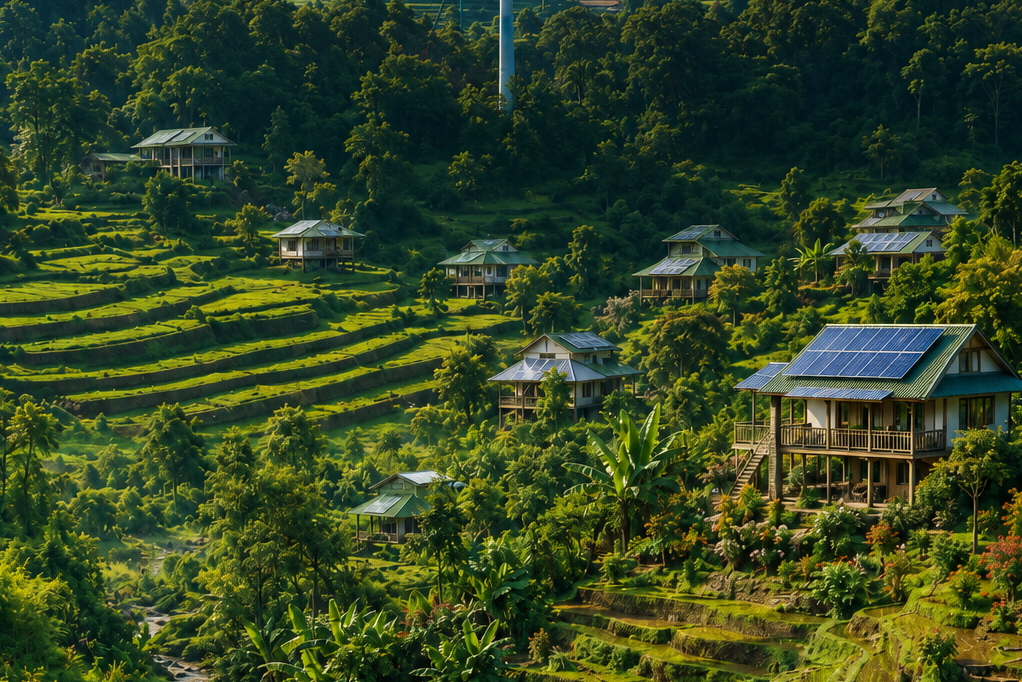
 Development asks: What can we build here?
Inhabitation asks: What kind of human presence would make this place more alive?
That may be one of the most urgent questions of our time.
We speak often about sustainability, resilience, regeneration, and restoration. Each word matters. But underneath them is a deeper civilizational question: How shall human beings inhabit the Earth?
Not simply occupy it. Not merely extract from it. Not retreat into protected enclaves of “nature.” But dwell within living systems in ways that increase their vitality, beauty, diversity, and capacity for renewal.
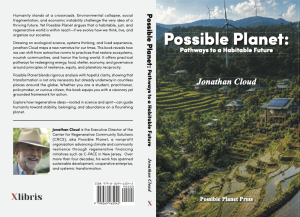
This is one of the central themes of my new book, Possible Planet: Pathways to a Habitable Future.
The future is not yet decided. Collapse is possible. So is renewal. But renewal will not come from technology alone, policy alone, markets alone, or even restoration projects alone. It will require a transformation in how we understand our role as a species.
For too long, modern civilization has treated land as real estate, nature as resource, and communities as labor pools or consumer markets. Even much environmental thinking has accepted the separation between “human systems” and “natural systems.”
But the deeper task is not simply to reduce harm.
It is to become a life-enhancing presence.
That shift requires us to think bioregionally: through watersheds, soils, forests, farms, cities, cultures, food systems, and histories. It also requires us to connect the many regenerative efforts already emerging around the world — restoration projects, ecovillages, regenerative farms, refugee-camp food systems, community finance models, watershed alliances, and bioregional learning networks.
Organizations such as the Design School for Regenerating Earth and the EcoRestoration Alliance are helping make this future visible: seeding local capacity, mapping restoration efforts, supporting communities, and showing how regeneration can spread through relationship rather than command.
The next step is to connect these efforts into a planetary learning system — not centralized, not bureaucratic, not extractive, but intelligent in the deepest sense: able to perceive, remember, learn, adapt, and act in service to life.
That is what I mean by planetary intelligence.
And it begins with inhabitation.
To inhabit is to belong responsibly.
To inhabit is to ask what a place is asking of us.
To inhabit is to restore the feedback loops between land, livelihood, culture, and governance.
To inhabit is to learn how human beings can become beneficial participants in the living Earth.
The next frontier is not merely sustainability. It is not even restoration in the narrow sense.
It is inhabitation.
How do we live here — on this Earth, in these watersheds, within these limits, among these beings — in a way that makes the world more alive?
That is the question that should guide us now.
Learn more about Possible Planet: Pathways to a Habitable Future here: Book.PossiblePlanet.org